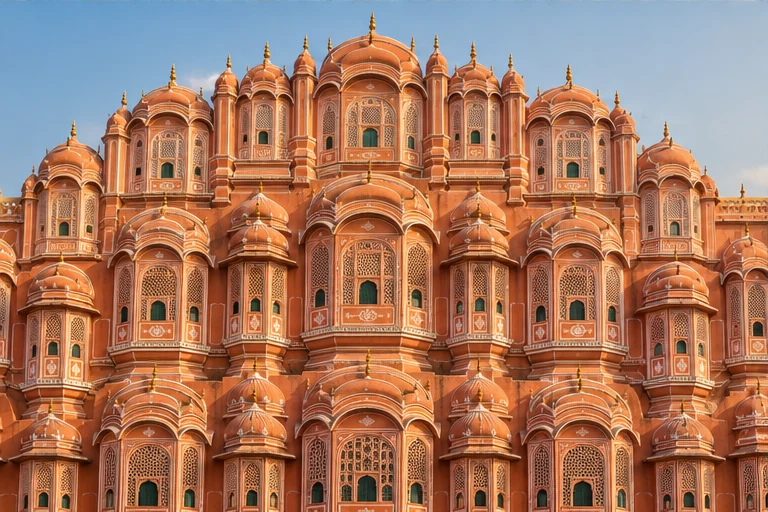
Some places announce themselves in colour. In Rajasthan, a warm facade or a printed textile can be an invitation to pause before you reach for the camera.
Begin with looking, not collecting
A photograph records the whole facade quickly. Looking takes a little longer. Notice the pattern within an arch, the relationship between a carved screen and the shadow behind it, or the way a warm surface changes as the sun moves. You do not need specialist knowledge to pay close attention.
Try a simple exercise: before taking the picture, find three details you had not noticed at first. The reward is not necessarily a better photograph. It is a fuller encounter with what is in front of you.
Follow the small details
A city is not only its most recognisable building. It is also a doorway, a shopfront, a courtyard and the route between them. Give yourself time to move through the ordinary streets as well as the architectural highlights, while respecting private spaces and local guidance.
Ask before photographing people or entering a workshop. Curiosity works best when it comes with courtesy. A place is someone’s everyday setting long before it becomes a visitor’s memory.
Watch something being made
A finished textile can be admired in a moment. Watching a pattern take shape changes the way you see it. In our Rajasthan itinerary concept, a block-printing workshop creates space to engage with process: repetition, pressure, alignment and the small variations of handwork.
The point is not to turn every experience into a lesson. It is to give yourself a little context. If you choose to buy something, ask about the materials and maker, and make your decision without pressure. A meaningful object does not need to be the most expensive one.
Let the journey change its tone
Jaipur and Udaipur offer an opportunity to imagine two different rhythms within one trip: architectural detail and city energy, followed by lakeside views and a slower evening. The road between them is part of the itinerary rather than an invisible transition.
On transfer days, leave room for rest and realistic pacing. A journey looks different on a map than it feels after several hours on the road. The best plans acknowledge that difference.
Carry the curiosity home
You might return with a textile, a sketch, a colour combination or simply a renewed habit of looking. That attention need not end with the trip. Architecture, craft and everyday beauty are often closer than we think.
Travel can sharpen our willingness to notice. Keep that willingness. The next interesting detail might be on a familiar street, waiting for the slower version of you to walk past.
Away from the expected.
Closer to what matters.