There is a particular kind of holiday exhaustion: a camera full of places, a notebook full of recommendations, and the feeling that you spent most of the time moving between them.
Make one thing enough
Try giving each day a single point of focus. A walk through a neighbourhood. A cooking afternoon. A coastal village. When one experience becomes the centre of the day, everything around it can breathe. You can stop for coffee without calculating what it will cost the timetable. You can linger when something surprises you.
This is not a rule against ambition. It is an invitation to be selective. A journey can be full without being crowded. The question is less “How much can I fit in?” and more “What would I like to remember about today?”
Leave an afternoon unnamed
An empty space in the itinerary can feel unfinished before departure. Once you arrive, it often becomes the most useful part. You might discover that a small street deserves another visit, that a book and a sea view are enough, or that you simply need a slower morning after travelling.
Give that open time the same respect as a ticketed experience. Resist filling it just because you can. You are not wasting the destination by sitting still. Sometimes being in a place, with no task to complete, is exactly the point.
Return to a place you liked
Novelty is an easy measure of travel: another café, another neighbourhood, another view. Familiarity offers something different. Return to the same small square at a different hour. Notice how the light changes. Find out whether you still want the dish you almost ordered yesterday.
The second encounter is often quieter and more rewarding. You are no longer working out where you are, so there is more attention available for what is around you.
Let the route support the feeling
Before choosing an itinerary, ask what kind of rhythm you want. A different hotel every night may suit one journey and exhaust another. Look at transfer days, early starts and the space between organised experiences, not just the list of highlights.
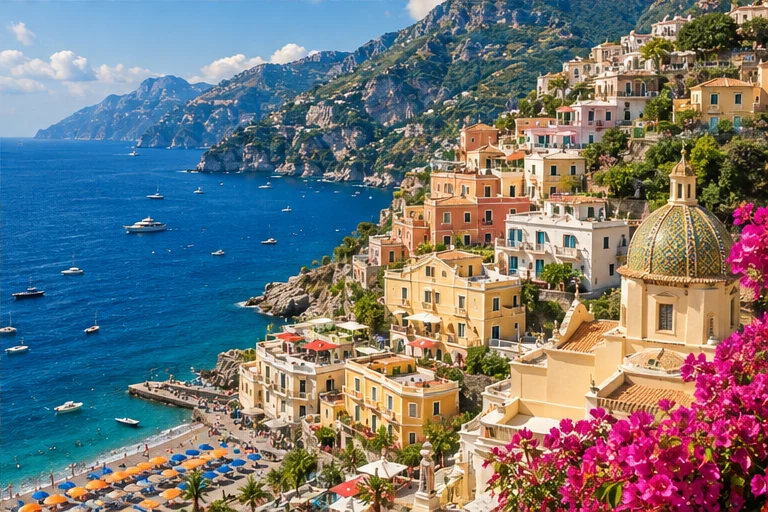
On our imagined Italian coast journey, open days sit alongside a cooking experience and a village outing. It is a way of balancing a little direction with the freedom to decide what the day becomes. The details can matter as much as the destination.
Take home more than a checklist
The memory that stays might be difficult to photograph: the sound outside an open window, a long lunch that ran into late afternoon, or the relief of having nowhere else to be. Those moments cannot be scheduled precisely. What you can do is make room for them.
A slower journey does not promise revelation. It simply gives you a better chance to notice the place, the people around you and your own changing pace. That is a good place to begin.
Away from the expected.
Closer to what matters.